

If you want to type in another language, you should not need to learn an entirely new physical keyboard. Google Input Tools makes multilingual typing more straightforward. It provides transliteration, input method editors (IMEs), virtual keyboards, and handwriting input.
Google currently describes Input Tools as available across Google services, Chrome, Android devices, and Windows. It supports more than 80 languages and input methods.
At the moment, the best choice is the Google Input Tools Chrome extension for people using Windows. This review looks at frequently asked questions such as what Google Input Tools does, how to install it, the languages and input methods it supports, its limitations, and whether it is a suitable option for Windows users.
What is Google Input Tools?
It is a collection of multilingual typing tools from Google. Instead of simply changing the physical keyboard layout, it can convert phonetic typing into another script. Also, it provides virtual keyboards, offers IMEs, and supports handwriting input.
For example, if you want to type in Hindi, then simply type a word phonetically using Latin characters. It can deliver Hindi-script suggestions.
Google specifically describes transliteration as converting the sound of text between writing systems rather than translating its meaning. The platform supports several input approaches.
Google’s official documentation lists IMEs, transliteration, virtual keyboards, and handwriting. Handwriting is specifically available through the Chrome extension. This tool is available for Google services, Chrome, Android devices, and Windows.
Google Input Tools Key Features
Transliteration
It is one of the most useful features for people who know how a word sounds but do not have the target script on their physical keyboard.
For example, if you enter a phonetic form such as “namaste,” then you can see many Hindi suggestions, and you can select a Hindi suggestion.
This makes it practical for students, writers, families, and professionals who regularly switch between English and another language.
Input Method Editors
IMEs provide a more structured way to enter languages that require conversion or composition. They include IMEs for languages such as Chinese, Japanese, Korean, Dutch, French, German, Italian, Portuguese, Spanish, and Vietnamese.
Virtual Keyboards
This displays characters on screen so users can select them without using a physical keyboard. This is particularly useful when typing an unfamiliar language or using a shared computer.
Handwriting Input
The Chrome extension supports handwriting input. Users can draw characters with a mouse or trackpad and select the desired character from Google’s suggestions.
Custom Dictionary
Google Input Tools for Windows can remember corrections and maintain a custom dictionary for new or uncommon words and names. This can make repeated multilingual typing more suitable.
Keyboard Shortcuts
The Chrome extension supports keyboard shortcuts for switching between input tools and toggling the active tool. The official documents list shortcuts, including Alt+Shift for moving between input methods and additional shortcuts for Chinese IMEs.
Google Input Tools User Interface & Performance
It keeps the interface relatively simple because it is primarily an input utility rather than a standalone writing application.
For Chrome Users, you install the extension and open Extension Options to select the languages and input methods you want. The selected tools can then be activated from the extension icon while typing on supported webpages.
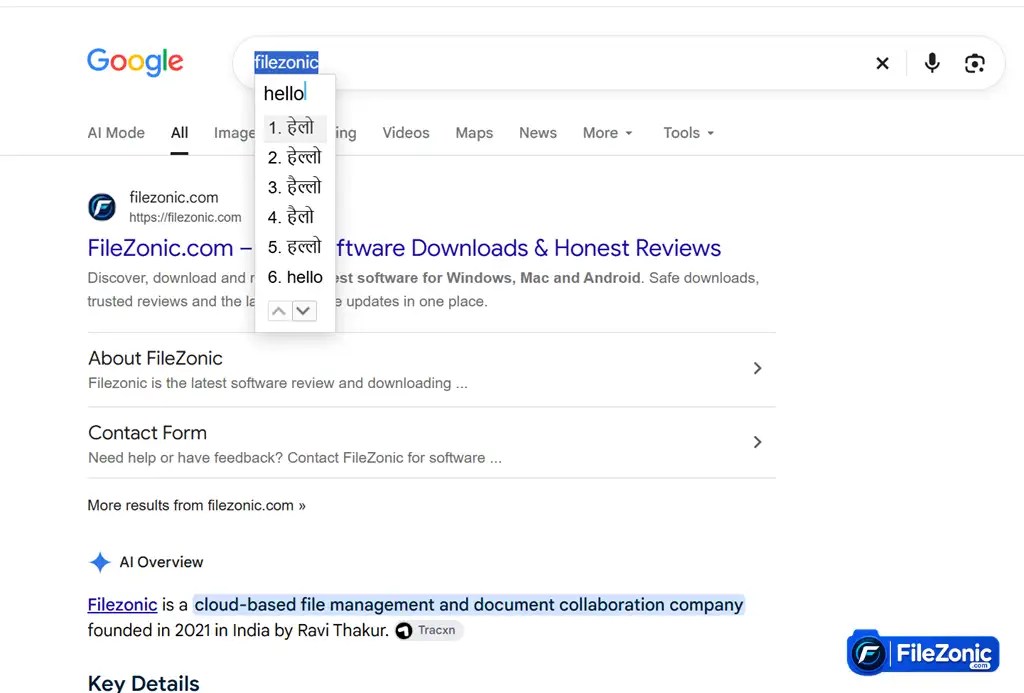
The approach is beginner-friendly. There is no large dashboard to learn. Users can add, remove, and reorder input tools from the options page.
The main limitation is that the Chrome extension is tied to browser input. The security restrictions prevent it from assisting with the Chrome address bar, Chrome Web Store, other Chrome extensions, and Flash applications.
Google Input Tools is a lightweight and simple typing tool rather than a resource-heavy desktop application. The Latest Chrome extension is only 842 KB according to the Chrome Web Store listing.
Its performance depends more on the browser, webpage, input method, and language than on demanding local processing.
This extension model is suitable for normal transliteration and keyboard use. Yet, it is not developed to replace a complete Windows-wide input system in every application. Also, some webpage input areas cannot be supported because of Chrome security restrictions.
Who Should Use It?
Google Input Tools is a good choice for:
- Students who write in multiple languages.
- Professionals communicating with international customers or colleagues.
- Users who prefer phonetic transliteration over learning keyboard layouts.
- People who regularly type in Google services.
- Chrome users who need multilingual typing on websites.
- Casual users who want a free and lightweight solution.
It is less suitable for someone who requires a fully system-wide Windows input application with extensive custom keyboard control.
Conclusion
Google Input Tools remains a useful multilingual typing solution, mainly for Chrome and Google-service users. Its biggest strength is flexibility. Users can choose transliteration, IMEs, virtual keyboards, or the handwriting feature.
The current Chrome extension is actively maintained by Google, and it continues to document a broad range of supported languages and input methods.
But there’s an important caveat for Windows users. Google officially supports Windows, but the current public documentation doesn’t provide the same level of detail regarding a standalone Windows installer as users might expect from traditional Windows software.
Across the board, Google Input Tools is a strong free option for multilingual typing in Chrome and Google services. It is more useful for transliteration.
Users who require system-wide keyboard support across many Windows applications should consider Microsoft’s built-in language tools or a dedicated multilingual keyboard platform.


